
 Sneaker Buying Guide
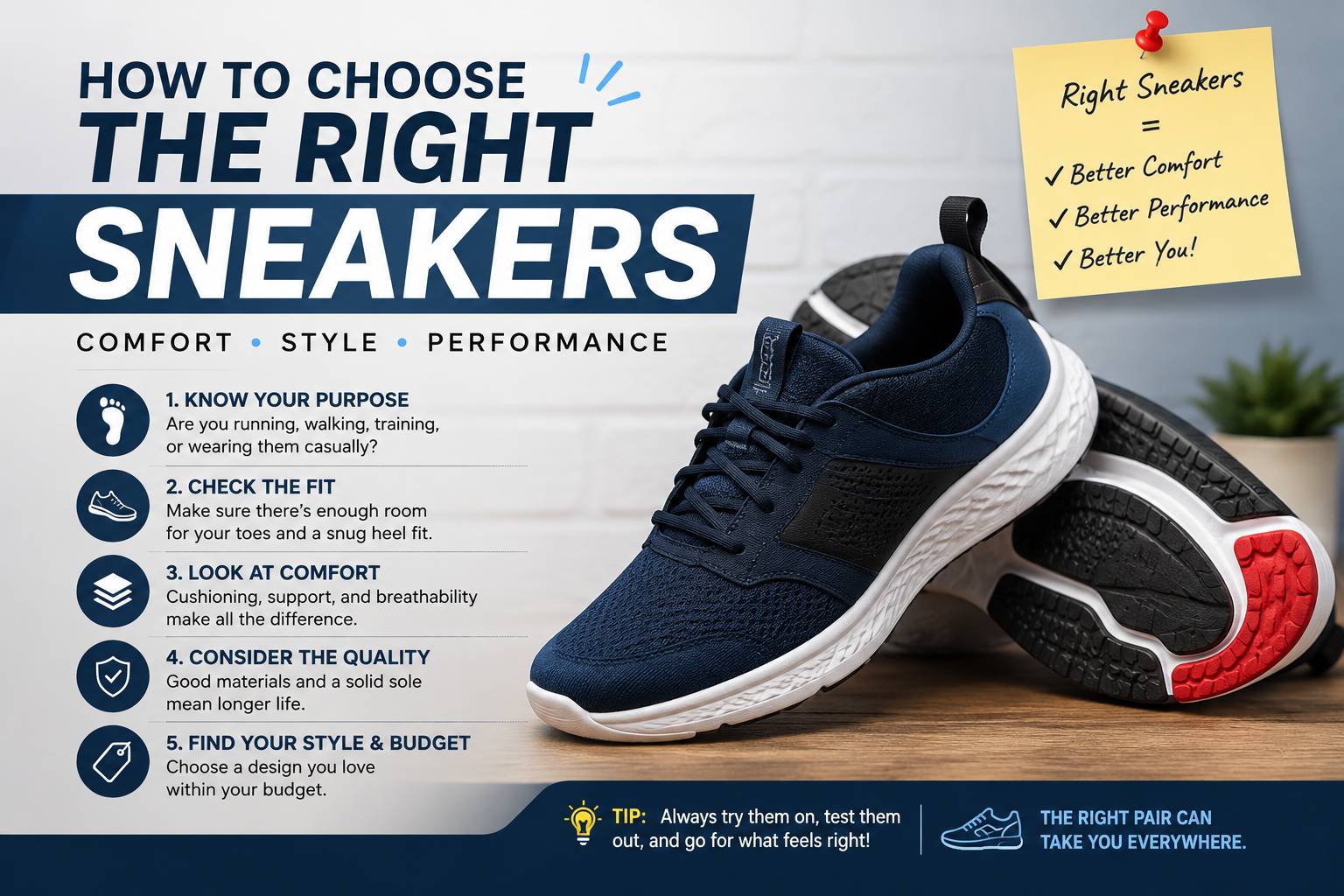
How to Choose the Right Sneakers
How to choose the right Sneakers – A practical guide to finding sneakers that fit your style, comfort needs, daily routine, and budget.
Choosing sneakers isn’t just about how they look. The right pair should fit properly, feel comfortable, suit how you actually use them, and offer good value for your money — this guide walks through exactly what to check before you buy.
Explore Best Everyday SneakersFirst, Decide What You Need Them For
The best sneaker for you depends heavily on how you’ll actually use it. Start here before comparing specific pairs.
Everyday / Casual
- Daily wear
- College
- Shopping
- Casual outings
- Comfortable cushioning
- Breathable upper
- Versatile design
- Durable outsole
Walking
- Long walks
- Daily commuting
- Standing for long periods
- Comfortable cushioning
- Good heel support
- Flexible sole
- Lightweight construction
Gym / Training
- Gym workouts
- Strength training
- Light training sessions
- Stable sole
- Secure fit
- Good grip
- Supportive construction
Ordinary running shoes aren’t automatically suitable for serious gym training — look for shoes built for lateral stability.
Running
- Jogging
- Running
- Regular cardio
- Appropriate cushioning
- Secure heel fit
- Breathable upper
- Suitable running outsole
Dedicated running shoes are generally a better choice for regular running than generic lifestyle sneakers.
How to Choose the Right Sneakers: 7 Things to Check
A quick mental checklist that applies no matter what type of sneaker you’re buying.
Get the Right Fit
Your toes should have enough room to move naturally, and your heel shouldn’t slip excessively. The shoe should feel secure without squeezing your foot. Try shoes with the type of socks you normally wear, and keep in mind that sizing can vary between brands and models.
Choose Comfort Over Appearance
An attractive sneaker is useless if it becomes uncomfortable after extended wear. Before buying, consider the cushioning, insole comfort, upper material, weight, and flexibility.
Check the Sole and Grip
The outsole matters more than most buyers realise — look at the rubber compound, tread pattern, grip, and flexibility. The ideal outsole depends on where the shoes will actually be used: a sneaker for smooth indoor surfaces doesn’t necessarily need the same grip characteristics as one used outdoors.
Consider Breathability
Ventilation matters for everyday use, especially in warm weather. Mesh, knit, textile uppers, and dedicated ventilation panels all help with airflow. The trade-off: more breathable materials can sometimes offer less structure or durability than heavier materials.
Don’t Ignore Weight
Lighter shoes can feel more comfortable for everyday walking, commuting, and extended wear. But lighter does not automatically mean better — a little additional structure can be useful when stability and durability matter.
Check Build Quality
Look closely at stitching, sole attachment, upper material, heel construction, and overall finishing before you buy.
Compare Price With What You Actually Need
The most expensive sneaker isn’t automatically the best value. Think in this order: Need → Features → Quality → Price. If you only need a comfortable everyday sneaker, paying significantly more for specialised performance features may not provide meaningful value.
How Should Sneakers Fit?
How to Choose the Right Sneakers: The Fit Checklist
- Comfortable around the widest part of your foot
- Heel stays reasonably secure
- Toes can move naturally
- No painful pressure points
- No excessive slipping while walking
Before Ordering Online
- Measure your foot.
- Check the brand’s size chart.
- Compare the measurements rather than relying only on your usual size.
- Check customer feedback about fit when available.
- Check the seller’s return/exchange policy.
No single size recommendation fits everyone — always cross-check against the specific brand’s chart.
Which Sneaker Material Should You Choose?
Actual performance still varies by shoe construction and material quality — this is a starting point, not a guarantee.
Mesh
Breathability and everyday comfort
- Lightweight
- Breathable
- Comfortable in warm conditions
- Can be less resistant to rough use
Knit
Flexible, casual comfort
- Flexible
- Comfortable
- Modern appearance
- May offer less structure
Synthetic Leather
Structured appearance and easier cleaning
- More structured
- Easy to wipe clean
- Often a more polished appearance
- Usually less breathable than mesh
Sneaker Type Comparison
| Sneaker Type | Best For | Cushioning | Stability | Breathability |
|---|---|---|---|---|
| Casual | Everyday wear | Medium | Medium | Medium–High |
| Walking | Long walks | Medium–High | Medium–High | High |
| Running | Running | Medium–High | Varies | High |
| Training | Gym/workouts | Medium | High | Medium–High |
“Varies” is used where not every shoe in a category shares identical characteristics.
How Much Should You Spend on Sneakers?
There’s no universal “right” price — the right budget depends on how you’ll use the sneakers.
- Basic everyday use
- Casual wear
- Budget-conscious buyers
- Fit
- Comfort
- Basic construction
- Grip
- Frequent everyday use
- Better comfort/features
- Buyers wanting more options
- Better cushioning
- Better materials
- Construction quality
- Brand/model reputation
- Specialised requirements
- Frequent running/training
- Buyers prioritising specific performance features
Price alone does not guarantee better quality.
6 Common Sneaker Buying Mistakes
Buying only based on appearance
A sneaker that looks great in photos can still be uncomfortable, poorly built, or the wrong fit for how you actually use shoes.
Choosing the wrong size
Sizing varies by brand and model, so relying only on your “usual size” can lead to a poor fit.
Ignoring the intended use
A sneaker built for casual wear won’t necessarily hold up for running or gym training, and vice versa.
Assuming expensive means better
Price is only one signal — fit, construction, and suitability for your use matter more than the price tag alone.
Ignoring sole grip
A worn-out or unsuitable outsole can affect comfort and safety, especially on wet or uneven surfaces.
Buying without checking return/exchange conditions
Fit issues are common with online orders — always confirm the return window before purchasing.
Before You Buy, Ask Yourself:
- What will I mainly use these sneakers for?
- Do they fit my foot properly?
- Are they comfortable enough for my typical daily use?
- Does the sole provide suitable grip?
- Is the material appropriate for my climate and usage?
- Is the price justified by the features I actually need?
- Have I checked the size chart?
- Have I checked the return/exchange policy?
Looking for a Good Pair?
If you don’t want to spend hours comparing dozens of sneakers, check our curated sneaker recommendations, where we focus on practical factors such as price, comfort, design, everyday usability, and overall value.
[Real product name]
Insert real price / rating from existing product data
Check Price on Amazon[Real product name]
Insert real price / rating from existing product data
Check Price on Amazon[Real product name]
Insert real price / rating from existing product data
Check Price on Amazon[Real product name]
Insert real price / rating from existing product data
Check Price on AmazonMore Buying Guides
Only keep the links above for pages that actually exist on YuvanStyle — remove or repoint any that don’t.
Frequently Asked Questions
Sneakers should feel secure without squeezing the foot, with enough room for your toes to move naturally and no excessive heel slippage.
Not entirely — sizing can vary between brands and models, so it’s best to check the specific size chart for each pair before buying.
No. Price isn’t a guarantee of quality — the right sneaker depends on fit, intended use, construction, and useful features rather than price alone.
Casual sneakers can be fine for everyday walking, but regular running is generally better supported by shoes designed specifically for running.
Mesh can be a great option when breathability and lightweight comfort are priorities, though overall durability and support still depend on the shoe’s construction.
There’s no universal price — match your budget to your usage and prioritise fit, comfort, durability, and the features you actually need.
Find Your Next Pair
Now that you know what to look for, explore our curated sneaker recommendations and compare your options.
Explore Sneakers